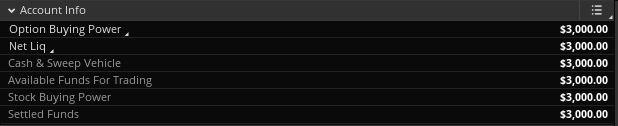
A second public $3,000 discretionary 0DTE series built around the lessons from the original 87-session experiment. Series I demonstrated both the potential of aggressive small-account compounding and the consequences of inconsistent risk management, lower-quality trades, and trading during poor market participation. Series II began from the same $3,000 balance with a more defined execution framework.
Starting Balance
$3,000
Current Balance
$2,055.76
Total Series P&L
-$944.24
Total Return
-31.47%
Green Day Rate
50.0%
Days Logged
10
Why this series exists
The original $3k Account Series was a public proof of concept for the Foxchase discretionary 0DTE framework. The account grew from $3,000 to a peak above $22,000 before a significant drawdown reduced the ending balance to roughly $6,300.
One of the biggest lessons from Series I was discovering just how important 5-minute relative volume (rVol) is for filtering out false or lower-quality setups. Not accounting for low-participation conditions contributed heavily to the July drawdown.
August and September have provided time to study rVol further, reaffirm that observation, and tighten several other parts of the framework. At the same time, work has continued on the private algo and dashboard.
Before the discretionary $3k Small Account Series II began, the rest of September was used as an observation and development period. This included monitoring the market through the new Series II rules, addressing remaining algo bugs, and observing the gated Extrinsic Divergence trades recently added to the bot.
Series II asks a different question: can the same aggressive small-account growth approach produce a better equity curve when the lessons from the first series are incorporated from Day 1?
This remains a growth-mode experiment. Profits will be compounded rather than withdrawn, and position sizing will remain intentionally aggressive. The difference is greater selectivity, predefined risk, and more consistent execution. There is no arbitrary account target; the series will simply follow the rules, compound the account, and document what happens.
Series II Rules
A+ setups: 50% deployment
Qualified A setups: 30% deployment, primarily qualifying Extrinsic Divergences
Anything below A: no trade
Low rVol (5-min): no trade
Default OCO: -20% stop / +20% target
Stops may tighten, never widen
Profit targets may extend
No adding to positions after entry
No chasing missed entries
Re-entries must independently qualify as a new A or A+ setup
The operating principle is simple: take the qualified trade, size it according to the planner, define the risk before entry, never widen the loss, and do not manufacture another trade.
Setup Quality & Deployment Framework
Deployment follows current setup conviction: A+ is the highest-conviction qualified setup and maximum planner preset at 50% deployment (approximately 10% planned account risk); A uses 30% deployment (approximately 6% planned account risk), including qualified Extrinsic Divergence trades; below A means no trade.
End-of-day account balance after every posted Series II session.
Start$3,000.00Peak$4,175.38Current$2,055.76
The curve tracks documented account equity: $3,000.00 at start, $2,960.22 after Session 1, $3,372.51 after Session 2, $3,278.89 after Session 3, $3,420.10 after Session 4, $3,178.48 after Session 5, $3,434.99 after Session 6, $3,567.96 after Session 7, $3,541.04 after Session 8, $4,175.38 after Session 9, and $2,055.76 after Session 10.
Management / Exit: Waited until after the aggressive 10am news move through the doubled PML/YDL levels rather than chasing the initial flush. Took the cleaner R5-E short setup afterward.
Management / Exit: Took another R5-E short as the bearish structure continued, but the trade failed to follow through and hit the predefined OCO stop loss. Once price later reached EM-, NDX GEX became especially useful for defining the expected range and downside targets.
Management / Exit: Took the final R5-E short after EM- was reached. With the lower NDX GEX level providing a clear downside target, I extended the take-profit beyond the default +20%. The move continued lower and hit the extended target for a win.
Trade 4
Setup Grade: A
Planned Deployment: 30%
Primary Entry Reason: Bearish Extrinsic Divergence short
Supporting Context: A-size / R5 tendency to favor bearish divergence
Management / Exit: Took the bearish divergence short, but the move did not follow through enough and hit the predefined stop loss.
Trade 5
Setup Grade: A
Planned Deployment: 30%
Primary Entry Reason: Bearish Extrinsic Divergence short re-entry
Supporting Context: A-size / option price never closed above the Bear Div entry / continued R5 bearish-divergence context
Management / Exit: Re-entered the bearish divergence short because the option price never closed above the original Bear Div entry. The trade moved into profit, but not quite enough to reach the target and ultimately stopped out.
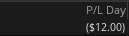
Closing observation: Overall, Day 1 ended slightly red after the two later bearish divergence attempts. The morning execution remained disciplined, particularly avoiding the 10am news spike and waiting for cleaner R5-E setups afterward. The later Bear Div trades had reasonable R5 context and both saw some profit, but neither produced enough follow-through to complete the move.
🦊 Day 2
🟢 Green Day
Starting Balance$2,960.22
Current Balance$3,372.51
Daily P&L+$441
Total Series P&L+$372.51
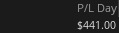
Thinkorswim displayed +$441.00 P&L Day. Documented account balance moved from $2,960.22 to $3,372.51 (+$412.29).
Trade 1
Setup Grade: A
Primary Entry Reason: Bearish Extrinsic Divergence short
Supporting Context: A setup / opening Bear Div
Management / Exit: Took a quick short scalp right at the open on the Bear Div and closed for a profit. I accidentally selected the wrong OCO order, so the position was much smaller than intended.
Trade 2
Setup Grade: A+
Planned Deployment: 50%
Primary Entry Reason: Spot up / vol up long
Supporting Context: A+ setup / R2 structure
Management / Exit: Took the A+ long with spot and volatility rising together. The move failed to follow through and hit the predefined OCO stop loss.
Trade 3
Setup Grade: A+
Planned Deployment: 50%
Primary Entry Reason: A+ long re-entry
Supporting Context: Same long thesis / z-score bounced exactly from the 0 zone
Management / Exit: Re-entered the A+ long after noticing z-score had simply bounced directly from the 0 zone rather than breaking down. The re-entry worked and profit was taken at PMH.
Trade 4
Setup Grade: A+
Planned Deployment: 50%
Primary Entry Reason: PMH rejection short
Supporting Context: A+ setup / R2 / PMH rejection
Management / Exit: Knowing how important PMH tends to be on R2 days, took the short when the rejection became clear. Took profit just above VWAP. Good trade, although the exit was too early and price continued lower afterward.
Closing observation: Very good Day 2 overall. The first Bear Div worked despite the accidental undersizing, the initial A+ long stopped out cleanly, and the re-entry was justified by the z-score 0-zone behavior rather than simply trying the same trade again. The PMH rejection then gave another clean A+ opportunity on the short side, a classic Regime 2 behavior.
🦊 Day 3
🔴 Red Day
Starting Balance$3,372.51
Current Balance$3,278.89
Daily P&L-$64
Total Series P&L+$278.89
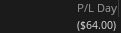
Thinkorswim displayed -$64.00 P&L Day.
Trade 1
Setup Grade: A+
Planned Deployment: 50%
Primary Entry Reason: NDX forward positive GEX ramp long
Supporting Context: A+ setup / immediate long at the open / expected spike above PMH
Management / Exit: Took the long immediately at the open with the NDX forward positive GEX ramp supporting a move above PMH. Exited at the default +20% target for +$280.
Trade 2
Primary Entry Reason: Long re-entry
Supporting Context: Re-entry of the opening bullish thesis
Management / Exit: Re-entered long looking for additional follow-through, but the continuation failed and the trade stopped out.
Trade 3
Primary Entry Reason: ZWAP short bias
Supporting Context: Short entry after the bullish continuation failed
Management / Exit: Took the short on ZWAP short bias, but the trade also failed to follow through and stopped out.
Closing observation: Too choppy of an environment today. Trade 1 was very good and hit the planned +20% target, but there was no meaningful follow-through afterward and we ultimately gave the gains back.
🦊 Day 4
🟢 Green Day
October 6, 2026
Starting Balance$3,278.89
Current Balance$3,420.10
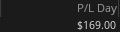
Daily P&L+$169
Total Series P&L+$420.10
Thinkorswim displayed +$169.00 P&L Day.
Trade 1
Primary Entry Reason: Spot up / vol up long above PMH
Management / Exit: Re-engaged the spot up / vol up long above PMH at A+ size once the higher-confidence opportunity presented itself. Intentionally took profit early to protect the recovery and finish the session green.
Closing observation:
Two good lessons from today.
First, never marry a position. Staying flexible after the first two failed attempts gave us the agility to re-engage the true A+ spot up / vol up opportunity in R4 above PMH and recover the day.
Second, a small cash account makes failed attempts more painful because settled-cash limits reduce how much capital is still available when the best setup finally arrives. That constraint should matter less as the account grows. For now, disciplined sniping is what has to grow the account.
🦊 Day 5
🔴 Red Day
October 7, 2026
Starting Balance$3,420.10
Current Balance$3,178.48
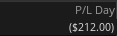
Daily P&L-$212
Total Series P&L+$178.48
Thinkorswim displayed -$212.00 P&L Day.
Trade 1
Primary Entry Reason: R5-R opening short
Supporting Context: Early R5-R downside / volatility expansion
Management / Exit: Took the short shortly after the open into the R5-R downward price action. Caught a volatility spike almost immediately and took profit at the default +20% target within seconds.
Management / Exit: Took the R5-R long attempt around 9:45 knowing the initial reversal can sometimes fake out. Targeted a move back toward VWAP, but the negative GEX environment kept price unstable and the trade ultimately stopped out.
Management / Exit: After the R5-R reversal failed and z-score stayed flat, entered short with a large negative SPX GEX strike below as the downside reference. Negative GEX continued to produce choppy price action, followed by a stretch of blue rVol that developed after entry and eventually helped stop the trade out.
Closing observation:
Trade 1 was exactly what we wanted: catch the clean R5-R opening move, take the quick +20%, and move on. The reversal attempt never developed cleanly in the negative GEX environment, and the later short was ultimately overwhelmed by chop and deteriorating participation. Another reminder that even when the broader read makes sense, the environment still has to cooperate.
🦊 Day 6
🟢 Green Day
October 8, 2026
Starting Balance$3,178.48
Current Balance$3,434.99
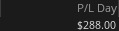
Daily P&L+$288
Total Series P&L+$434.99
Thinkorswim displayed +$288.00 P&L Day.
Trade 1
Setup Grade: A
Planned Deployment: 30%
Primary Entry Reason: Bullish Extrinsic Divergence long
Management / Exit: Took the Bull Div long at A-size. The trade moved into profit, but with negative GEX creating a less stable environment and some blue rVol developing, I took profit slightly early rather than pressing for additional follow-through.
Trade 2
Setup Grade: A+
Planned Deployment: 50%
Primary Entry Reason: R5-R reversal long
Supporting Context: A+ setup / z-score 0 crossover / Y-mid rejection / blue rVol developing during the trade
Management / Exit: Took the A+ R5-R long. A stretch of blue rVol developed during the trade and slowed the move considerably. After the z-score crossed above 0 and SPY rejected Y-mid on the 5-minute chart, I moved the stop up to lock in profit rather than leave the position exposed to a full reversal. I was stopped out in profit, price exploded higher once again shortly afterward, but then reversed back down, reinforcing just how fragile the Y-mid area remained.
Closing observation:
The broader R5-R thesis had strength, but the repeated failure to cleanly hold above Y-mid and the blue rVol made the area fragile. Tightening the stop protected profit while still respecting the setup, and the subsequent spike higher followed by another reversal reinforced why reducing risk there made sense.
🦊 Day 7
🟢 Green Day
October 9, 2026
Starting Balance$3,434.99
Current Balance$3,567.96
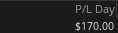
Daily P&L+$170
Total Series P&L+$567.96
Thinkorswim displayed +$170.00 P&L Day.
Trade 1
Primary Entry Reason: z-score double-top short
Supporting Context: R4 morning / increasing but still blue rVol / SPX max GEX below price / SPX GEX cradle
Management / Exit: Shorted the z-score double top, a bearish pattern I’ve seen repeatedly on R4 mornings. I knowingly broke the Series II low-rVol rule because rVol was still blue, although it was increasing and the setup had strong supporting context. The trade immediately worked and hit the default +20% take-profit within about two seconds. Target was SPX max GEX below price.
Management / Exit: Took another short into the SPX cradle looking for continuation lower, but the trade failed and stopped out.
Trade 3
Primary Entry Reason: Short re-entry
Supporting Context: Max NDX negative GEX aligned with lower SPX max GEX
Management / Exit: Re-entered short with NDX max negative GEX lining up closely with SPX max GEX below. The trade moved into profit, so I tightened the stop to protect gains rather than leave the position exposed in the choppy environment.
Closing observation:
Ended up making roughly the same amount as if I had simply taken Trade 1 and stopped for the day. Another tricky, low-rVol Friday where we have to tread lightly and be extremely selective. I’ll take the profit though, better than flat.
The main blemish today was Trade 1 technically breaking the blue-rVol rule. It worked immediately, but that doesn’t change the fact that it was an exception to a rule Series II was specifically designed to enforce.
Management / Exit: Columbus Day brought extremely low participation, with 5-minute rVol staying mostly blue and gray. Most of Friday’s cash was still unsettled in the cash account, so this was effectively a skip day. I used roughly $100 of settled cash for a small short attempt into an order block, but the trade failed.
Closing observation:
No surprise here. Options premiums spent most of the morning chopping around with very little clean follow-through. The proper decision was essentially no trade, but given the very small risk of a 1-contract SPY position, I took a small discretionary probe anyway.
🦊 Day 9
🟢 Green Day
October 13, 2026
Starting Balance$3,541.04
Current Balance$4,175.38
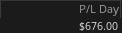
Daily P&L+$676
Total Series P&L+$1,175.38
Trade 1
Primary Entry Reason: Bearish Extrinsic Divergence short
Supporting Context: Bearish OB rejection / trade confirming in profit / bullish OB downside target
Management / Exit: Entered the Bear Div short at A-size off the bearish order block rejection. As the trade moved into profit and continued to confirm, I added to the position to bring total deployment up toward A+ size. Took profit on the bullish order block tap.
Trade 2
Primary Entry Reason: Long z-score setup
Supporting Context: High rVol / PDC upside target
Management / Exit: Took the long on the z-score setup with strong rVol supporting the move. Took profit as price pushed toward PDC.
Closing observation:
Very clean day overall. Trade 1 lined up the Bear Div with the bearish OB rejection and gave us a clear bullish OB target below. Trade 2 then gave a clean long opportunity with high rVol supporting the move toward PDC.
One thing worth documenting: adding to Trade 1 after entry technically broke the current Series II no-adding rule, however this was turning an A trade into an A+ trade by adding to a confirming trade rather than averaging down.
Management / Exit: Shorted at the open after seeing the exponential z-score pattern that we have previously associated with Regime 6 reflecting R1-CC behavior. About halfway through the trade, price began trending upward in a way that did not look normal for the thesis. The position eventually stopped out slightly above VWAP.
Trade 2
Primary Entry Reason: Long after failed R6 / R1-CC behavior
Management / Exit: Once it became clear that the expected R6 / R1-CC behavior was not developing normally, I switched long with a stop below PML in case PML had marked the day’s low. The long also stopped out.
Closing observation:
Regime 6 volatility got the best of us today. The original directional thesis (R6/R1-CC) ultimately played out, but the path there was far more volatile than expected. I sized Trade 1 as what I believed was a solid A+ setup, and I have no regrets about taking the trade or the size. The mistake was in execution and underestimating the amount of intraday volatility the setup would have to survive. A strong reminder that getting the eventual direction right is not enough; understanding the expected path and intraday volatility is just as important when sizing and managing 0DTE positions.
Each session records day number, status, starting balance, current balance, daily P&L, total Series P&L, trade reasoning, supporting context, management / exit notes, and screenshots.
Foxchase Trading, LLC provides educational content only and does not provide investment advice. Trading involves substantial risk of loss and is not suitable for all investors.